About This Course
This course introduces the foundations and evolution of neural network architectures, from early neural networks and CNNs to Transformers, large language models, and AI agent systems. It focuses on efficient deep learning, including model compression, acceleration, and deployment on resource-constrained and edge devices, and presents practical applications of efficient AI in real-world scenarios.
Program Outcomes
Students understand how modern AI architectures evolved and how they are adapted for efficient and scalable deployment. They gain insight into methods for reducing model complexity while maintaining performance and learn how AI systems are brought from the cloud to edge devices and agent-based sys-tems.
Learning Objectives
- Understand the fundamentals of artificial neural networks and the evolution of deep learning architecture.
- Explain key techniques for efficient deep learning, including pruning, quantization, distillation, compact model design etc.
- Understand principles of edge AI, label-efficient learning, and unsupervised methods.
- Describe the foundations of large language models and emerging AI agent systems.
Requirements
Students should have prior knowledge of basic machine learning concepts, proficiency in Python, and familiarity with foundational deep learning techniques. Experience with frameworks like TensorFlow or PyTorch is recommended but not required.
General Information
- Teaching Format: Experience
- Total Workload Master: 125h (40h/85h) / 5 ECTS
- Total Workload MBA: 100h (40h/60h) / 4 ECTS
- Total Workload Micro Degree: 125h (40h/85h) / Equivalent to 5 ECTS
- Examinations: Quizzes, presentation(s), essay(s)/paper(s), project report(s), written exam (tbd) - Details will be announced with course start.
- Offered: Odd quarters
Course Staff
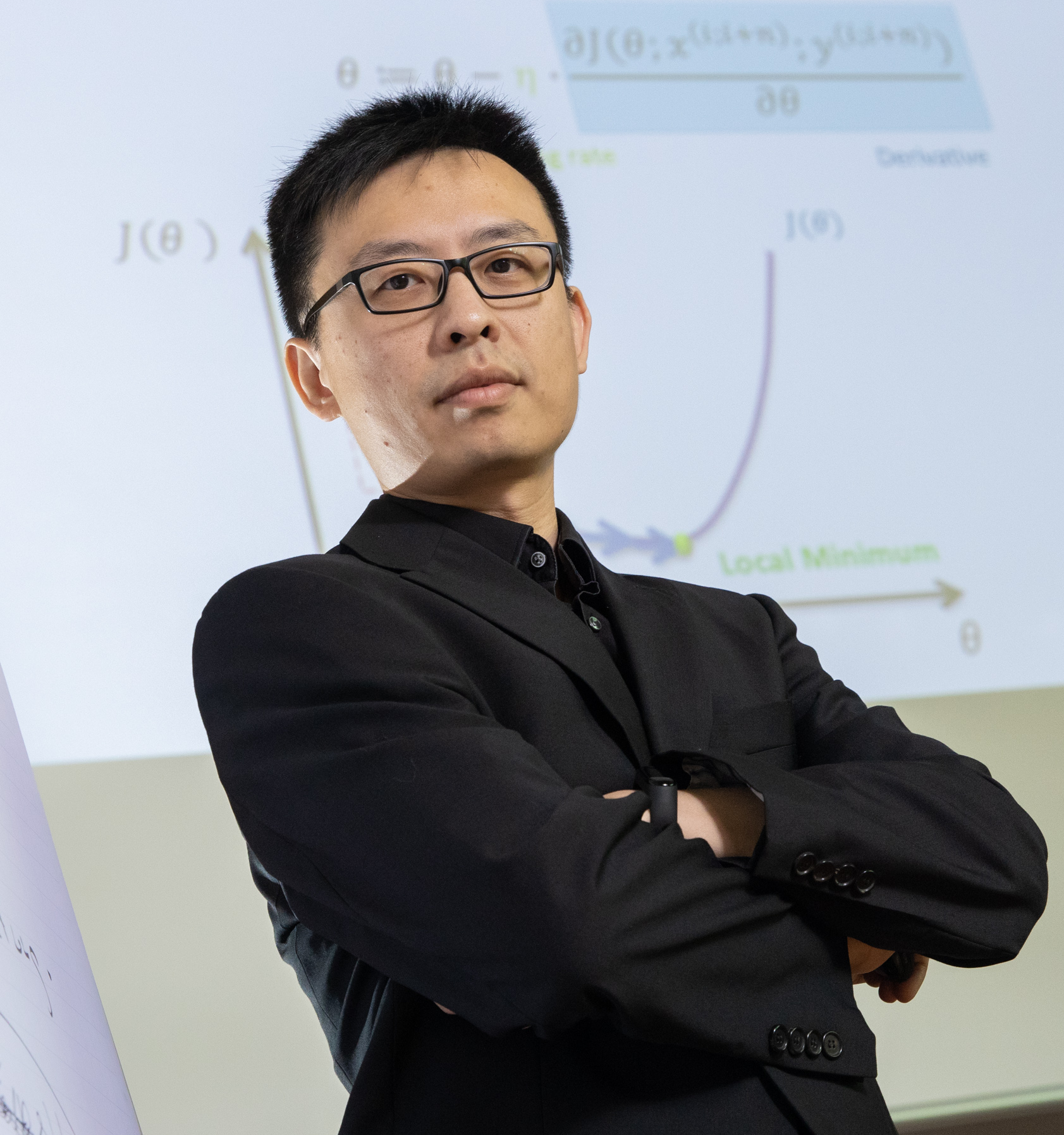
Prof. Dr. Haojin Yang
Haojin Yang is a researcher in multimedia and machine learning. He received his Ph.D. (with the highest praise: summa cum laude) from the Hasso Plattner Institute (HPI). He previously led the Multimedia and Machine Learning (MML) research group at the Hasso Plattner Institute (2017–2025) and has been habilitated for a professorship since 2019. His research focuses on efficient deep learning, model acceleration and compression, and agentic AI systems. He also formerly served as Head of the Beijing branch of Alibaba AI Labs’ Edge Computing Laboratory (2019–2020) and as Chief AI Scientist at Huawei’s Edge-Cloud Innovation Lab (2021–2023). He has also served as (Senior) Program Committee Member of top AI conferences such as NeurIPS, ICML, ICLR, AAAI, CVPR etc.
Frequently Asked Questions
What web browser should I use?
Our German-UDS.academy platform works best with current versions of Chrome, Edge, Firefox, or Safari.
See our list of supported browsers for the most up-to-date information.